
2026 Frequently Asked Questions
The St. Johns Public Schools community will have the opportunity to vote on a bond proposal on the November 3, 2026, election ballot. If approved by voters, this bond proposal would provide $40,000,000 for district-wide improvements with a projected zero-mill increase over the current tax rate.
This bond proposal, reduced from the 2025 proposal, focuses on safe and functional facilities for students.
The frequently asked questions page contains a long list of questions that we commonly hear our community members asking. Please look through the below list before submitting a question, as it just may have been asked and answered already!
What is a bond proposal and how can funds from a bond be spent?
A bond proposal is how a public school district asks its community for authorization to borrow money to pay for capital expenditures.
- Voter-approved bond funds can be spent on new construction, additions, remodeling, site improvements, athletic facilities, playgrounds, buses, furnishings, equipment, and other capital needs.
- Funds raised through the sale of bonds must be used for “capital expenditures.”
- Funds cannot be used on operational expenses such as employee salaries and benefits, school supplies, and textbooks.
- Bond funds must be kept separate from operating funds and expenditures must be audited by an independent auditing firm.
Bond spending is governed by MCL 380.1351a(2), which states: The proceeds of bonds issued under this section or under section 11i of the state school aid act of 1979, MCL 388.1611i, shall be used for capital expenditures and to pay costs of bond issuance, and shall not be used for maintenance costs. Except as otherwise provided in this subsection, a school district that issues bonds under this section or under section 11i of the state school aid act of 1979, MCL 388.1611i, shall have an independent audit, using generally accepted accounting principles, of its bonding activities under these sections conducted within 120 days after completion of all projects financed by the proceeds of the bonds and shall submit the audit report to the department of treasury. For bonds issued under section 11i of the state school aid act of 1979, MCL 388.1611i, the independent audit required under this subsection may be conducted and submitted with the annual report required under the revised municipal finance act, 2001 PA 34, MCL 141.2101 to 141.2821.
What are the main focus areas of this bond?
This bond proposal focuses on our most pressing facility priorities according to community input:
✔️ Updating Safety & Security
✔️ Replacing Aging Infrastructure
✔️ Updating Classroom Furniture, Fixtures, Equipment, and Technology
✔️ Replacing Aging Parking Lots and Sidewalks
✔️ Renovating Classroom Spaces
Why a bond proposal?
The district is considering a bond proposal because it is the only funding mechanism available to a public school district that could fund all of the priorities identified by the District, the community, and the Board of Education.
In 2010, voters approved a $64 million bond issue for improvements throughout the district. While the 2010 bond took care of some critical issues at that time, there are many infrastructure systems that have since outlived their expected useful lives. This bond proposal would address the remaining, currently identified issues in our parking and paving, safety & security, stormwater management, etc. If the bond proposal is approved, it would include the replacement of the identified systems and would extend the useful life of our school buildings.
Why another proposal after the 2025 proposal was not approved by the community? What was the process to get to these suggested improvements?
Our aging facilities continue to face issues and have much room for improvement to best serve our students, staff and community. After the May 6, 2025, proposal was not approved by our community, we engaged community members in one-on-one conversations, meetings, multiple Board of Education meetings and workshops, and a community-wide survey to understand how we can address some of these needs in a way that our community would support.
The revised proposal has been reduced to reflect the values of our community to address only our most pressing priorities according to community input.
For a complete project list, see here: 2026 Complete Project List
How is the 2026 proposal reduced from the 2025 proposal?
Projects included in the 2026 bond are reduced from the 2025 proposal based on community feedback. The 2026 proposal is $59,800,000 less than the 2025 proposal.
| Projects Eliminated or Reduced from the 2025 Proposal: | Projects Included in the 2026 Proposal: |
| ������ $20+ million Early Learning Center | ✔️ Updating Safety & Security |
| ������ Multi-purpose turf field | ✔️ Replacing Aging Infrastructure |
| ������ Stage Fly System | ✔️ Updating Classroom Furniture, Fixtures, Equipment & Technology |
| ������ Additional Tennis Courts | ✔️ Replacing Aging Parking Lots and Sidewalks |
| ������ Wrestling Room Addition | ✔️ Renovating Classroom Spaces |
| ������ Riley Courtyard Reconfiguration | |
| − REDUCED Arts and Athletics Scope | |
| − REDUCED Elementary Classroom Additions | |
| − REDUCED Transportation Facility Scope |
For a complete project list, see here: 2026 Complete Project List
Bond Projects
What are the main projects of this bond proposal?
This bond proposal focuses on our most pressing facility priorities according to community input:
✔️ Updating Safety & Security
✔️ Replacing Aging Infrastructure
✔️ Updating Classroom Furniture, Fixtures, Equipment, and Technology
✔️ Replacing Aging Parking Lots and Sidewalks
✔️ Renovating Classroom Spaces
For a complete project list, see here: 2026 Complete Project List
What are the proposed safety & security improvements?
The bond would provide the following improvements for safety and security enhancements throughout the district:
- Secure vestibule entries
- Door hardware replacement
- Improved door access controls and alert system
- Additional security cameras
School safety is a layered approach—there is no single solution that eliminates risk entirely, but it is a combination of measures that can help create a safer environment. Physical security enhancements, such as cameras and secure building entrance vestibules, are just parts of the equation. Equally important are measures that focus on prevention, including strong relationships between students and staff, threat assessment protocols, and emergency preparedness training.
Regarding backpacks, schools continually evaluate policies based on research, expert recommendations, and what is practical for students and staff. While eliminating backpacks can seem like a simple, no-cost solution, it also presents challenges in terms of student needs and enforcement. Our focus remains on proactive safety strategies that address both prevention and response, and we are always open to feedback as we work toward creating safer learning environments.
We appreciate all the engagement in this conversation and encourage ongoing dialogue as we continue to refine and improve school safety measures.
If a new Early Learning Center isn't included in the bond proposal, what are the district's plans for early learning programming?
As has been shared openly in recent years, our early learning programs are in high demand, have not had adequate space to handle their long waitlists, and programs are spread between three buildings, which makes staffing a challenge. In our area, there are about six children per every one available spot in childcare: https://erec.msu.edu/projects/child-care-mapping-project/maps-and-charts/child-care-supply-and-demand.
When the previous proposals were not approved by our community, the District consulted financial advisors and construction partners to explore what other options might be available to address our identified early learning program needs. For approximately $3 million, SJPS purchased and is renovating a newer building (1999 compared to the 1966 East Olive building) into the new Early Learning Center to bring it up to standards.
The purchase of the Tolles Drive property provides the district additional classroom space to continue to prioritize smaller class sizes at K-3 level both at Oakview and Riley, and also utilize classroom space at Oakview for its original intention of an art classroom. With the purchase of the new ELC the district was able to avoid purchasing a portable classroom for the 2026-27 school year for the additional 3rd grade section moving up to Oakview next year. The building on Tolles Drive was purchased to be renovated into an early learning center (ELC). We currently have an early childhood program in our district spread out among three different buildings, one of which is East Olive, which was built in 1966. The ELC will provide a centralized location for efficiency purposes, collaboration amongst staff and general operational costs being one building.
The district purchased the building for $300,000 and is renovating the building for $2.7M. The district is in the final stages of selling East Olive to a community organization. The new Early Learning Center is set to open for the start of the 2026-27 school year. The purchase and renovation of the new ELC allowed the district to open three more classrooms that were preschool classrooms, two at Oakview and one at Riley. In the 2024 & 2025 bond proposals, the new build of an ELC would have cost approximately $24M. The savings of the purchase and renovation of Tolles Dr. saved $21M of estimated costs along with opening additional classroom space at both Oakview and Riley Elementaries (another focal point of the 2024 & 2025 bond proposals).
If approved, the 2026 bond would provide a gym and two classroom additions to meet the needs of our Early Learning programming.
Why was the old East Olive Building not considered for the Early Learning Center
The District did consider the East Olive building for an Early Learning Center. However, East Olive is a 60-year-old building with many aging systems and infrastructure items in the building, many of them past their useful lifespan.
The building is only equipped with partial cooling in certain areas, so adding this to a building of this size would be costly.
The building is outfitted with aging boilers that are failing.
This building runs on propane due to its rural location, and propane is around 30% more expensive than natural gas to purchase for operational use.
Last year, the District had a $90,000+ insurance claim due to excessive mold in the building. Mold developed overnight because of the amount of humidity in the building and no way to get rid of it with the limited cooling systems. We risk this happening again.
On top of the high operational cost, the building is a general liability to the district with its aging infrastructure and potential issues down the road.
To renovate this building even to basic standards with minor improvements, it would have cost approximately $4.1 million. To best steward resources, the District has decided to sell the East Olive building and invest in the newly purchased and renovated Early Learning Center on Tolles Dr. (which cost approximately $3 million, including purchase of the building)
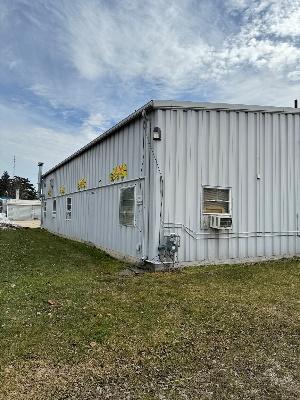
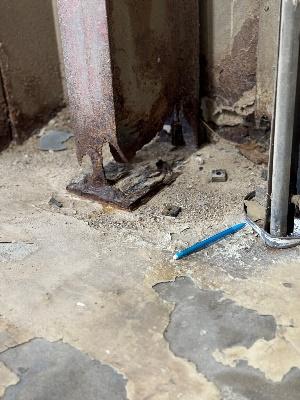
Why replace the transportation building?
Our existing maintenance and office structures are beyond their useful life expectancy. Constructing a replacement facility would not only update the building; it would also allow us to incorporate the transportation office into a new facility to eliminate an extra building and improve communication and staff efficiency.
With our transportation department responsible for over 200 square miles, functioning buses and transportation infrastructure are vital to serving students.
Why replace playground equipment?
Playgrounds require inspection to ensure that equipment and safety surfacing meet current codes and regulations, including determining if any physical deformations of the equipment exist. To ensure compliance with current codes, as well as considering ongoing maintenance costs to keep the existing equipment safe, it was determined that the replacement of the equipment would be the appropriate long-term solution. This bond would provide funding to improve our youngest learners’ access to play to supplement their classroom learning. Adding new playground equipment at schools would also help to provide an equitable playground experience, no matter which school students attend.
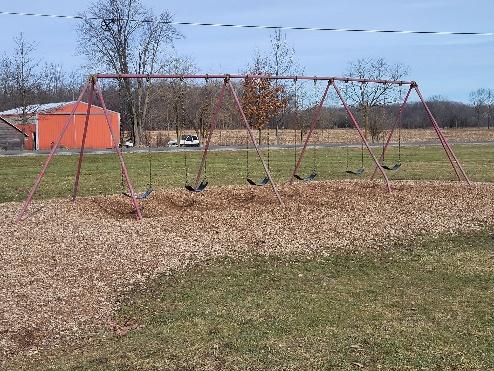
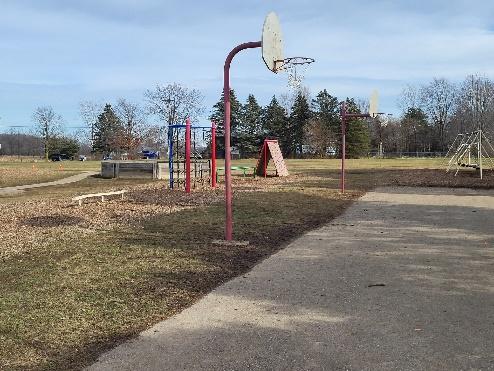
Photos from current playgrounds
Financial Information
How would the bond proposal impact my property taxes?
If approved by voters, this bond proposal would provide $40,000,000 for district-wide improvements with zero mill increase expected over the prior year’s levy.
For more information about how to calculate your property tax impact, please click here.
What does it mean that there is a zero-mill increase “expected" or “projected”?
We use the wording expected only to communicate that the tax rate information is a projection of future taxable values. These projections are based on careful analysis of financial data by both the district and our municipal financial advisors based on current information. SJPS does not anticipate an increase in the tax rate.
Below are some financial details of the projection:
St. Johns Public Schools currently levies 7.0 mills for debt. The rate of 7.0 mills has been in place for the past 31 years.
If approved by voters, the proposal would add millage while previous bond debt is paid off simultaneously, keeping the total estimated millage rate at 7.0 mills.
If approved, the rate is projected to remain at 7.0 mills through 2032 with decreases over time as bond debt is paid off.
Careful financial projections of the projected taxable value of property in our community are calculated with current data.
Is the bond millage rate expected to be the same for the next 30 years?
No. The bond millage rate is estimated to remain at 7.0 mills through 2032, and thereafter it is estimated to decline due to bond repayment and taxable value growth, as illustrated in the chart below. If the bond is not approved by voters, the millage rate is estimated to decline to 5.83 mills in 2027.

How long has SJPS been levying 7 mills?
SJPS’s millage rate has been 7 mills without increase since 1995.
How does the projected millage rate compare to nearby districts?
The graph below shows how the zero-mill increase compares to districts around SJPS.

How much money would the bond proposal generate, and would the funding be issued all at once?
The proposal would generate $40,000,000 which would be spent over five years. The bonds are proposed to be issued in one series to be sold in 2027.
How can the school district complete this bond proposal without increasing the bond millage rate of 7.00?
Each year the bond millage rate is recalculated based on the school district's new taxable value figure and the bond payment required in the upcoming year. Due to repaying prior outstanding bonds along with taxable value growth, it is estimated that the bond millage rate required to pay the existing bond payments will decline to allow this proposal to be funded without having to change the present bond millage rate of 7.00.
Would the approval of the bond proposal have any impact on our current operational budget?
While funding from this bond proposal is independent of the district's general fund operating budget, the bond would likely have a positive impact on the district’s general fund by allowing the district to reallocate operating funds that are currently being spent on aging facilities, mechanical systems, and technology. The operational savings generated from new and more cost-efficient facilities could be redirected to student programs and resources.
When would the millage for this proposal first be levied if the bond proposal is approved by voters?
On the December 1, 2027 property tax bill.
Are technology purchases going to be amortized (paid off) over a 30-year period?
No. Most technology purchases are required to be amortized (paid off) over a 5-year period beginning at the time of installation.
How does bond financing work?
Think of bond financing like a mortgage. When you buy a home or make major renovations, you borrow a large sum of money now and pay it back, with interest, over time. A mortgage helps a homeowner match income and expenses, and it allows for the purchase of a home or major improvements now so they can be enjoyed during the owner's lifetime. While interest expense adds to the overall cost of the purchase or improvements, most homeowners consider the expense worthwhile so they can purchase or upgrade a home on their desired timeline.
Bond funding is very similar. Instead of borrowing from a bank, districts sell bonds to investors to get a lump sum of money now, and then pay those investors back, with interest, over time. Interest adds to the total overall cost of projects just like a mortgage, but it allows districts to make improvements now to benefit current and future students.
The projects funded with a bond would serve the district for many years. Spreading the cost over 20 – 30 years allows the district to make changes now, while also ensuring future users of the facilities also share in the cost. In other words, the bond repayment schedule prevents current taxpayers from bearing today the entire cost of upgrades that will serve the district for decades.
How would I know the bond funds would be spent the way they are supposed to be spent?
Michigan law requires that the expenditure of bond proceeds be audited, and the proceeds cannot be used for repair or maintenance costs, teacher, administrator or employee salaries, or other operating expenses. An audit would be completed at the end of each series to ensure compliance.
What are “Indirect” or “Soft” Costs?
Indirect costs, sometimes referred to as “soft costs,” are costs required to prepare for and complete a construction project. They occur throughout the duration of the bond projects, which in St. Johns case are anticipated to occur over five to six years.
Contingency (10%): Reserved to accommodate unforeseen costs related to existing building and site conditions
Architect’s Fees (<8% of construction value): Fees to allow further program development, design, documentation of projects for construction, issuance of bidding documents and field observation during construction
Construction Manager’s Fees (<8% of construction value): Fees to manage the construction process including:
Ongoing estimating and budget confirmation throughout design
Coordination of bidding process and post-bid evaluation of bids received
Coordination of subcontractors
On-site staffing for construction observation
General Conditions (2%): Costs that support construction that are not captured by subcontractors’ bids. These include:
Temporary facilities (Job trailer(s) and temporary restrooms, temporary fencing, on-site safety measures (signage, etc.))
Temporary utilities (power, water, gas, etc.)
Dumpsters for waste and recycling
Material testing costs
Permit fees
Soft Costs/Consultants (2%):
Geotechnical services
Site surveys
Permit fees
Food service, technology, and security consultants
Commissioning services
What types of projects do bonds fund? What does the general operating budget fund?
Bonds allow SJPS to prioritize facility advancements without taking from other integral school resources. See below for a breakdown of which types of projects each can fund.
General Operating Budget | Bond Funds |
|---|---|
|
|
Why commit to our country schools rather than build new buildings in town for all elementary students?
SJPS has intentionally chosen to continue to enhance our county elementary buildings to ensure these students have access to a similar caliber of learning environments as those at Oakview and Gateway. Using funds to upgrade these buildings—rather than replace them completely—allows bond funds to spread further and be used on other priorities across the district.
Together with the Community Steering Committee and the Board of Education, we considered a few different scenarios that looked to address any facility and operational inefficiencies. This will allow us to continue our focus on neighborhood schools and keep the overall cost of the bond proposal lower by not building a new elementary-level building in town, while still addressing the needs of the building and the learning environments of the students there.
Why did the district utilize a non-voted bond to pay for and renovate an Early Learning Center? How does that purchase affect this bond?
The purchase of the Early Leaning Center has many benefits to the district however, this was not simply put, a want by the district.
This decision was driven by three primary factors—each representing an existing need that general operating funds cannot cover.
1. The current 2nd grade class has a higher number of students, which required an additional section to be opened at Gateway. Gateway with some shuffling, was able to open up a classroom to accommodate the need when these students were in kindergarten. Oakview, however, does not have the ability to do so due to the fact that preschool occupies 3 classrooms in the building.
The only option to be able to house the additional section of to be 3rd graders would be to purchase a mobile classroom for the next 3 years. At the cost of $100,000 per year this would bring additional costs to the district that would never see returns.
2. East Olive is no longer a viable option due to code requirements. When the district moved the Little Wings program from the Wilson Center, the work needed to be done to satisfy licensing and code requirements to operate out of the 4 classrooms was minimal. If the district were to reopen the entire building, it would be subject to higher code standards that financially did not make sense for the district. With a sticker price of over $1,000,000 alone to upgrade the fire suppression system in the 1957 building and an additional $2,000,000 to modernize the rest of the building, it only made sense to move the program into a building that would be newer and not have the required upkeep of an older facility.
3. The ability to put all pre-k programs under one roof. Currently, Preschool (both GSRP and tuition-based) are spread out across 3 buildings with various start times. Putting all classes under one roof allows for standardization of time but also structure to our young learners and their families. As a result of relocating the preschool classrooms, we get additional classroom space at Riley and Oakview. This will allow for the district to continue prioritizing lower class sizes at the k-3 level as well as give programs an appropriate space to educate our students.
The non-voted bond does not have any effect on the current proposed bond. Though a non-voted bond does provide much of the same functions as a voted bond, repayment is an obligation of the general fund, the amount available is limited compared to a voted bond, and it is not a viable option for the scope of work in this proposed voted bond.
Why not a sinking fund?
Using sinking funds for large-scale capital improvement projects is not practical and would require an increase in the millage rate.
A 1-mill tax rate increase would provide approximately $1,018,849 in the first year. The maximum 3-mill tax rate increase would provide approximately $3.06 million in the first year. (This hypothetical is shown below.)
Larger projects would need to be delayed for several years to develop a large enough fund to complete them.
How are public schools financed in Michigan? (General fund, bonds, and sinking funds)
Michigan schools are funded through operating funds, bond proposals, and sinking funds. The nature of each of these mechanisms and the cases in which they would be most practical vs. impractical are outlined below:
Operational funding
Funding for the day-to-day operations of the district is provided through state, federal and local sources.
The majority of the funding is allocated through the state per pupil foundation allowance
Programs and services, personnel costs, utilities, supplies and maintenance costs are financed in this category.
Operational funds do not provide enough money to make significant improvements to infrastructure.
Bonds
A bond proposal is how a public school district asks its community for authorization to borrow money to pay for capital expenditures.
With a bond, taxpayers approve an amount of bonds to be issued and taxes are collected in the amount necessary to cover principal and interest on bond debt.
Funds raised through the sale of bonds cannot be used on operational expenses such as employee salaries and benefits, school supplies, and textbooks.
Bond funds must be kept separate from operating funds.
SJPS currently levies a combined 7.0 mill debt millage rate.
Sinking funds
A sinking fund is a proposal that requests voters to approve a taxation on property that would pay for capital expenditures over time.
Sinking funds have limited allowable uses, including school building construction and repair, school real estate, security improvements, student transportation vehicles, and technology purchases or upgrades.
A sinking fund may be authorized for a maximum of 3 mills and for no more than 10 years.
Using sinking funds for large-scale capital improvement projects is not practical.
A 1-mill tax rate increase would provide approximately $922,474 in the first year. The maximum 3-mill tax rate increase would provide approximately $2.8 million in the first year.
Larger projects would need to be delayed for several years to develop a large enough fund to complete them.
SJPS does not have a sinking fund millage.
If SJPS considered a sinking fund for voters, it would be a tax rate increase, and would need to be approved each time an approved sinking fund expires.
Are bus purchases going to be amortized (paid off) over a 30-year period?
No. Bus purchases are required to be amortized (paid off) over a 6-year period beginning at the time the buses are put into service.
Are businesses and second homes (non-homestead properties) and primary homes (homestead properties) treated the same regarding bond millage?
Yes, businesses and second homes (non-homestead properties) and primary homes (homestead properties) are treated the same regarding bond millage.
Are there property tax exemptions to anyone of any kind?
If a business has been granted an Industrial Facilities Tax ("IFT") credit then only half of the taxable value is subject to the bond millage. The business would need to verify if some of the taxable value has been designated for the IFT credit. One item a community member could research is the Michigan Homestead Property Tax Credit. The Michigan Homestead Property Tax Credit is a method through which some taxpayers can receive a credit for an amount of their property tax that exceeds a certain percentage of their household income. This program establishes categories under which homeowners or renters are eligible for a Homestead Property Tax Credit. We would recommend that community members consult their tax advisor to determine if they are eligible for this tax credit.
Can you help residents understand how schools of choice students impact the district?
The foundation allowance follows the student, which means the district receives State funding for each student that is enrolled at St. Johns Public Schools. For each student who attends through schools of choice, SJPS receives state funding, similar to how it receives State funding for in-district students.
Maintaining up-to-date facilities is one way that districts compete for students. While St. Johns receives foundation allowance revenue for non-resident enrollees, the district also loses the foundation allowance for each resident student that enrolls in another school district or charter school.
Would money from the bond proposal be used to pay teachers’ salaries and benefits?
No. School districts are not allowed to use funds from a bond for operating expenses such as teacher, administrator or employee salaries, routine maintenance, or operating costs. Bond proceeds must be kept separate from operating funds and expenditures must be audited by an independent auditing firm.
Bond spending is governed by MCL 380.1351a(2), which limits bond spending to "capital expenditures" (which excludes employee salaries and benefits) and also requires bond funds to be audited.
What oversights would hold the district accountable?
If approved by voters, the district’s Architect/Engineer would design the proposed projects and prepare construction documents and specifications for the projects. Once the projects are designed, the district’s Construction Manager will assemble bid packages and publicly advertise to solicit competitive bids for all work. This is required by law, as outlined in the Revised School Code. This process ensures that the district selects the lowest responsive and responsible bidder. All qualified contractors will have an opportunity to attend a pre-bid meeting to obtain additional information and project clarification. All qualified contractors will have the opportunity to participate in the competitive bid process.
At what point would the State of Michigan, as well as the local fire and police departments, provide input regarding the bond projects?
Each project will be required to be submitted to both the Bureau of Construction Codes (BCC) and the Bureau of Fire Services (BFS) for both plan review and permitting. These agencies will review the projects to ensure they comply with applicable codes before any building permits are issued. Building plans and specifications must be signed and sealed by a Licensed Architect/Professional Engineer before submission. As of 2019, Michigan law requires school districts to consult on the plans for the construction or major renovation regarding school safety issues with the law enforcement agency that is the first responder for that school building. This consultation would happen after a bond proposal has been approved by voters and before construction documents are finalized prior to project commencement.
Voting Information
How do I register to vote?
Visit Michigan.gov/vote to register to vote online. It is recommended by the Secretary of State to register by mail by October 19, 2026 to participate in the November 3, 2026 election. Individuals may also register in-person at their local clerk’s office through November 3, 2026, with the required documentation. For assistance in obtaining the address of your local clerk, visit Michigan.gov/vote.
How is an absentee voter ballot obtained?
Registered voters must complete and submit the application to receive their absentee voter ballot. To vote by mail, fill out the application and sign it, and then return it to your local clerk. For assistance in obtaining the address of your local clerk, visit Michigan.gov/vote. When filling out the application, if you check the box to be added to the permanent absentee voter list, you will get an application mailed to you before every election.
If you registered to vote after absentee voter ballot applications were mailed, applications may be obtained online at Michigan.gov/vote. Absentee voter ballots are available as early as September 19 through election day, November 3, 2026.
What are the key dates leading up to Tuesday, November 3, 2026 election day?
Registering to vote:
The last day for voters to register by mail is October 19, 2026.
Voters may register in person through November 3, 2026 (election day) with the required documentation.
Absentee Voting:
Absentee voter ballots are available as early as September 19 until November 3, 2026 (election day).
On or before Saturday, September 19, 2026 - Absentee voter ballots must be available to be sent to voters serving in the military or living overseas.
Absentee voter ballots must be available by Thursday, September 24, 2026 to be sent to members of the general public.
Contact your local clerk with questions.
Attend a public information community forum. We will announce these dates as Election Day gets closer.
Are owners of property in the school district eligible to vote if they do not reside in the school district?
Owners of property are only eligible to vote if they reside within the school district’s boundaries. To be eligible to register to vote you must be:
A Michigan resident (at the time you register) and a resident of your city or township for at least 30 days (when you vote)
A United States citizen
At least 18 years of age (when you vote)
Not currently serving a sentence in jail or prison
If I rent a house or apartment, can I vote?
Yes, if you rent a house or apartment, you can still vote. You must be a registered voter in the city or township you are living in and live within the school district’s boundaries.
Where and when will the vote occur?
Tuesday, November 3, 2026 is election day, but absentee voting can occur leading up to that date. All registered voters may cast an absentee voter ballot by mail. Voters may also cast a ballot at the polling location established by their city/township. If you have questions or do not know where you vote, please contact your city/township clerk’s office. Polls will be open from 7:00 am to 8:00 pm on Tuesday, November 3, 2026.
Additional Questions
Who do I contact if I have additional questions?
Please visit our website or contact the District Office at 989.227.4050.
Not seeing a question in the list?


